Customer Segmentation with Excel, Orange, and K-Means
Retail customer clustering from Online Retail transactions
Built a customer segmentation workflow for Online Retail transaction data using Excel for raw-data inspection and Orange for visual preprocessing, feature engineering, clustering, and interpretation. The portfolio report version has been regenerated under Thai Hoai An only, with all other names removed from the public artifact.
Timeline
2026
Type
Project
Status
completed
My work
- •Led the portfolio-safe artifact: data inspection, EDA framing, and customer-level feature design
- •Built and interpreted the K-Means segmentation workflow and final report
Outcome / Impact
- •Processed 541,909 raw transaction rows into 349,203 valid records after CustomerID filtering, transaction cleaning, UK-only filtering, duplicate handling, and TotalPrice creation
- •Engineered 16 customer-level behavioral features covering recency, frequency, monetary value, product diversity, invoice behavior, and basket characteristics
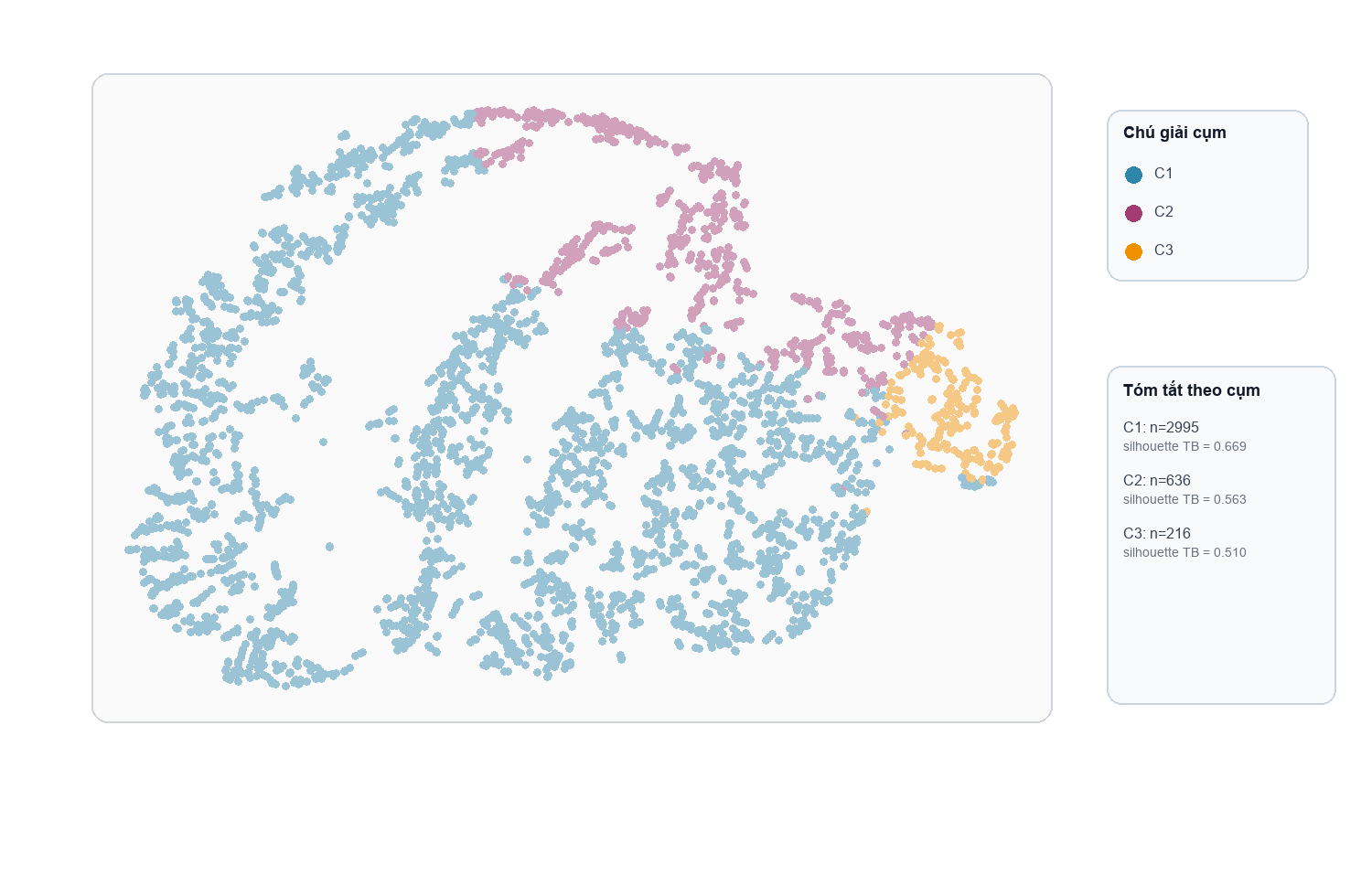
- •Compared K-Means configurations at k=3 and k=4, then selected k=3 for clearer business interpretation
- •Generated a portfolio-safe PDF report under Thai Hoai An only, removing all other personal names from the public customer segmentation artifact
Tech / Skills
Project Media
Demo video and visual walkthrough for this project.
Project Screenshots
Case Study
1) Context / Problem
Retail transaction logs are difficult to act on directly because each row represents a purchase event rather than a customer profile. The project turns raw Online Retail transactions into customer-level clusters that can support differentiated retention and marketing strategies.
2) Your Role
I led the portfolio version of the project artifact: data inspection, EDA framing, customer-level feature design, K-Means clustering interpretation, and final report preparation under my own name only.
3) Approach
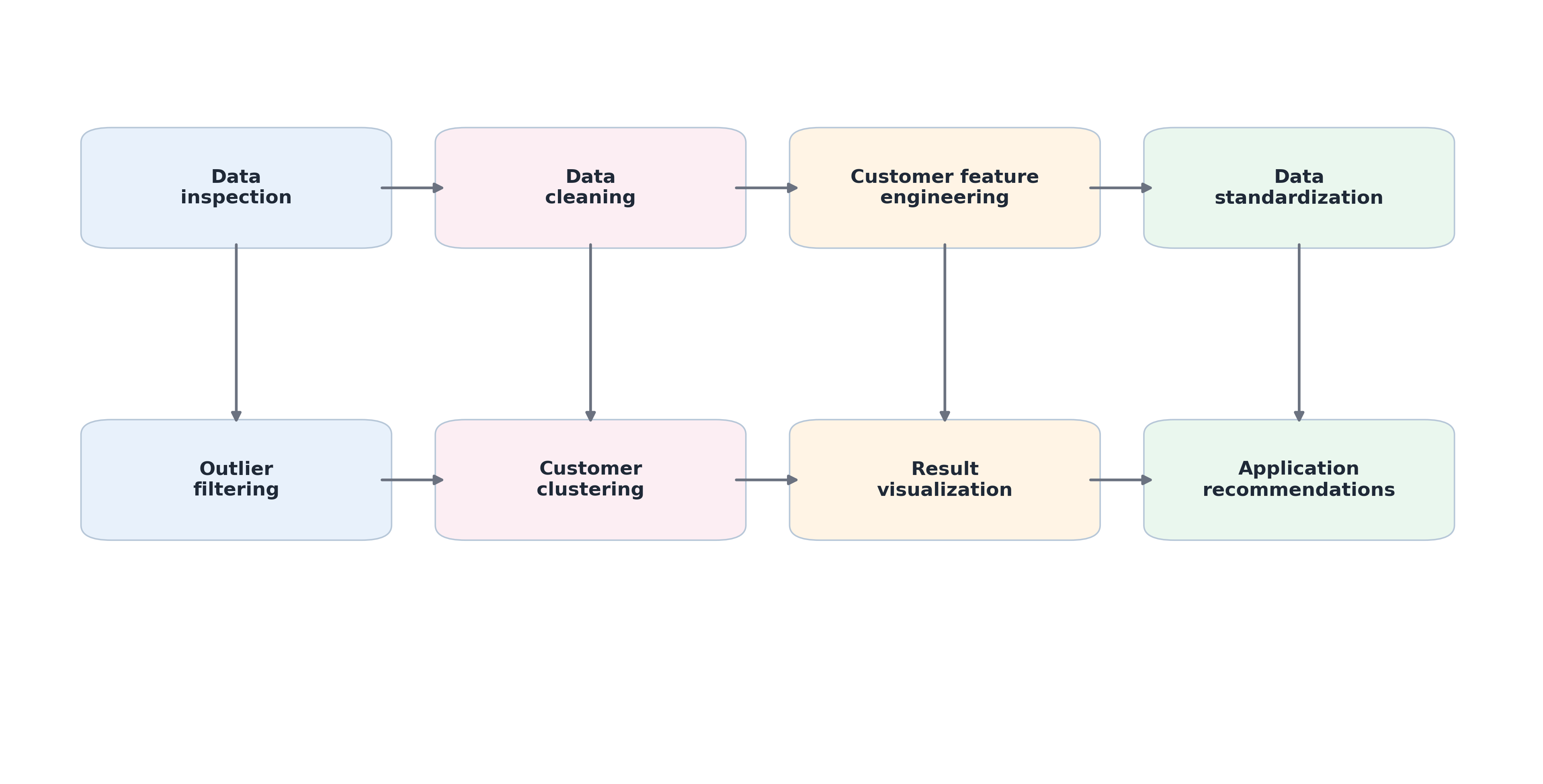
Used Excel to inspect raw records and missing CustomerID values, then built an Orange workflow for filtering invalid transactions, creating TotalPrice, grouping records by customer, standardizing features, removing outliers, and comparing K-Means clusters through t-SNE and cluster profiles.
4) Result / Impact
The final workflow selected a 3-cluster segmentation with interpretable customer groups and generated visual evidence for preprocessing, feature engineering, cluster selection, t-SNE separation, and business recommendations.
5) Learnings
For business-facing clustering, interpretability matters more than simply maximizing a metric. A smaller number of stable, explainable segments is easier to translate into marketing action.
6) Links
Add demos, repos, papers, slides, press, or media.