GreenFlow: Agentic Digital Twin for Building Energy
Finalist, Vin Green Future Hackathon 2026
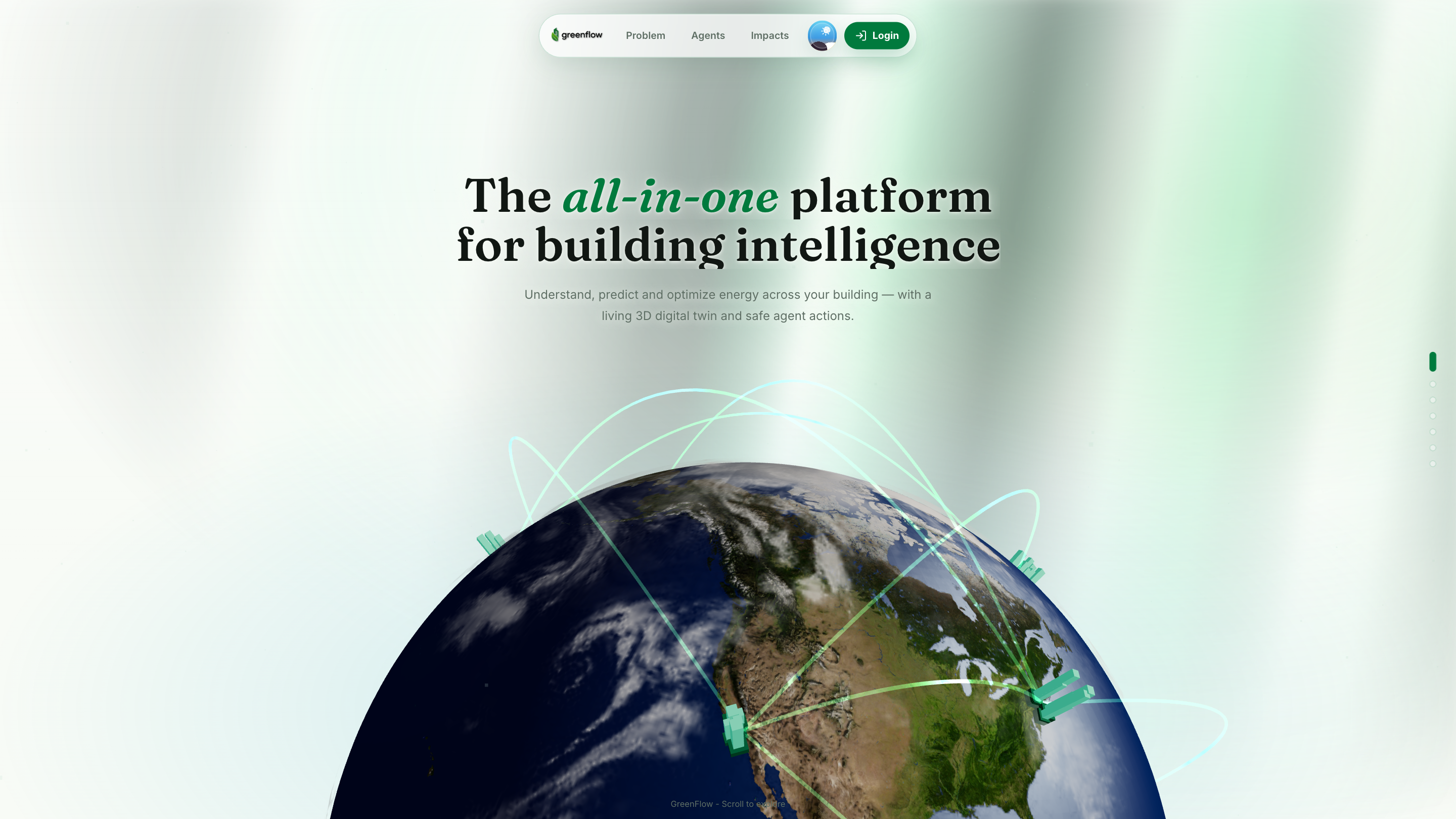
Built the AI layer and web experience for GreenFlow, a simulation-first digital twin that helps building operators investigate energy use and evaluate safer control actions. The system combines LangGraph agents, function-calling over operational data, graph-grounded RAG, and an operator chatbot with simulation, policy gates, human approval, and auditable execution traces.
Timeline
2026
Type
Competition
Status
completed
My work
- •Designed the LangGraph orchestration flow across semantic analysis, prediction, control, simulation, policy, approval, and response composition
- •Built function-calling tools that query structured building telemetry and KPI data through parameterized SQL instead of LLM-generated SQL
- •Developed graph-grounded and hybrid RAG retrieval for building entities, equipment relationships, policies, reports, and historical context
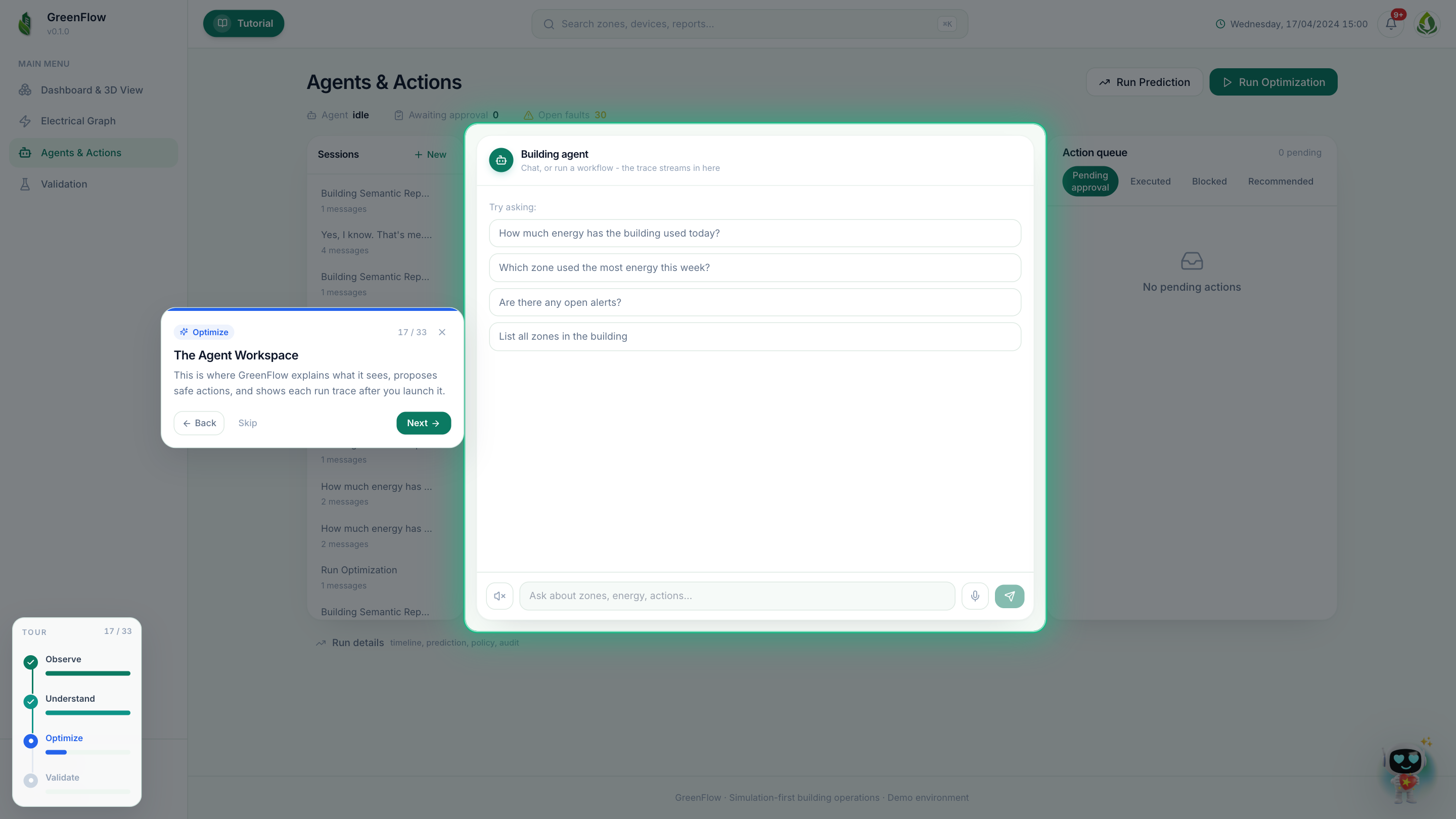
- •Implemented the Ask GreenFlow chatbot with tool traces, cited sources, linked building entities, conversation persistence, and configurable LLM providers
Outcome / Impact
- •Selected as a finalist at the Vin Green Future Hackathon 2026
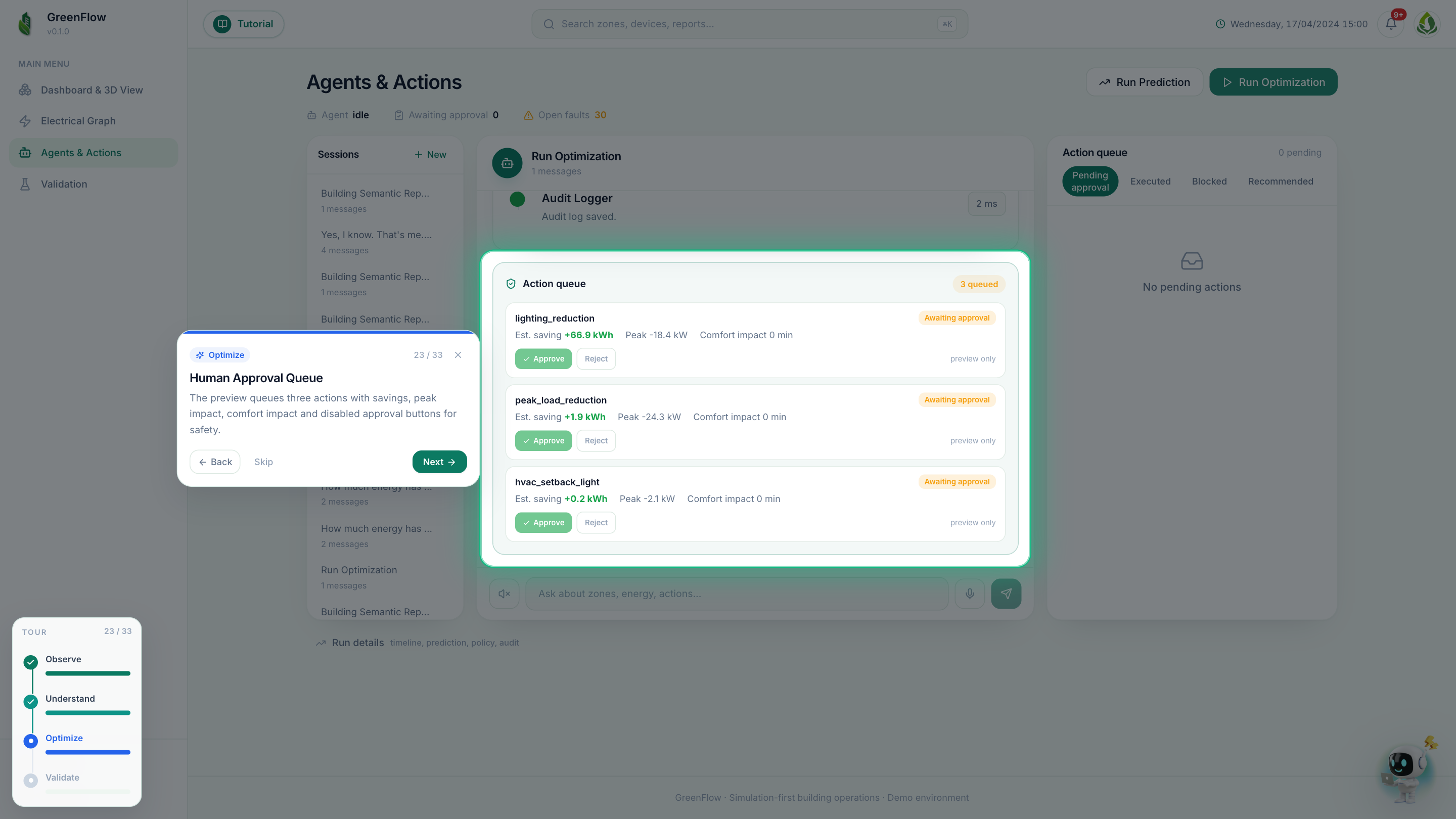
- •Delivered an agentic workflow that grounds recommendations in building state, runs counterfactual simulation, applies policy guardrails, and routes risky actions for human approval
- •Separated structured function-calling from unstructured retrieval so operational figures come from controlled data tools while policies and reports come from hybrid RAG
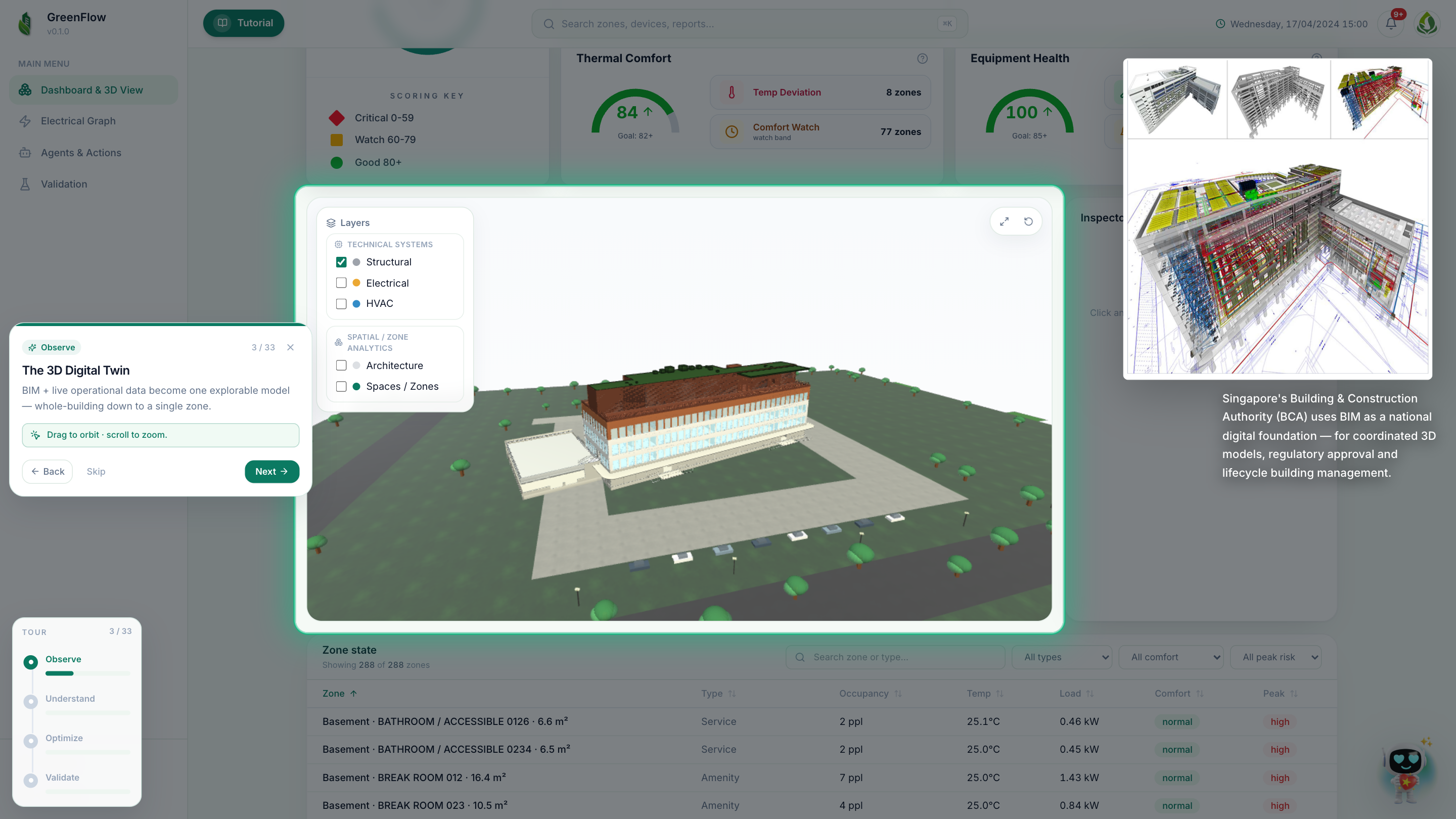
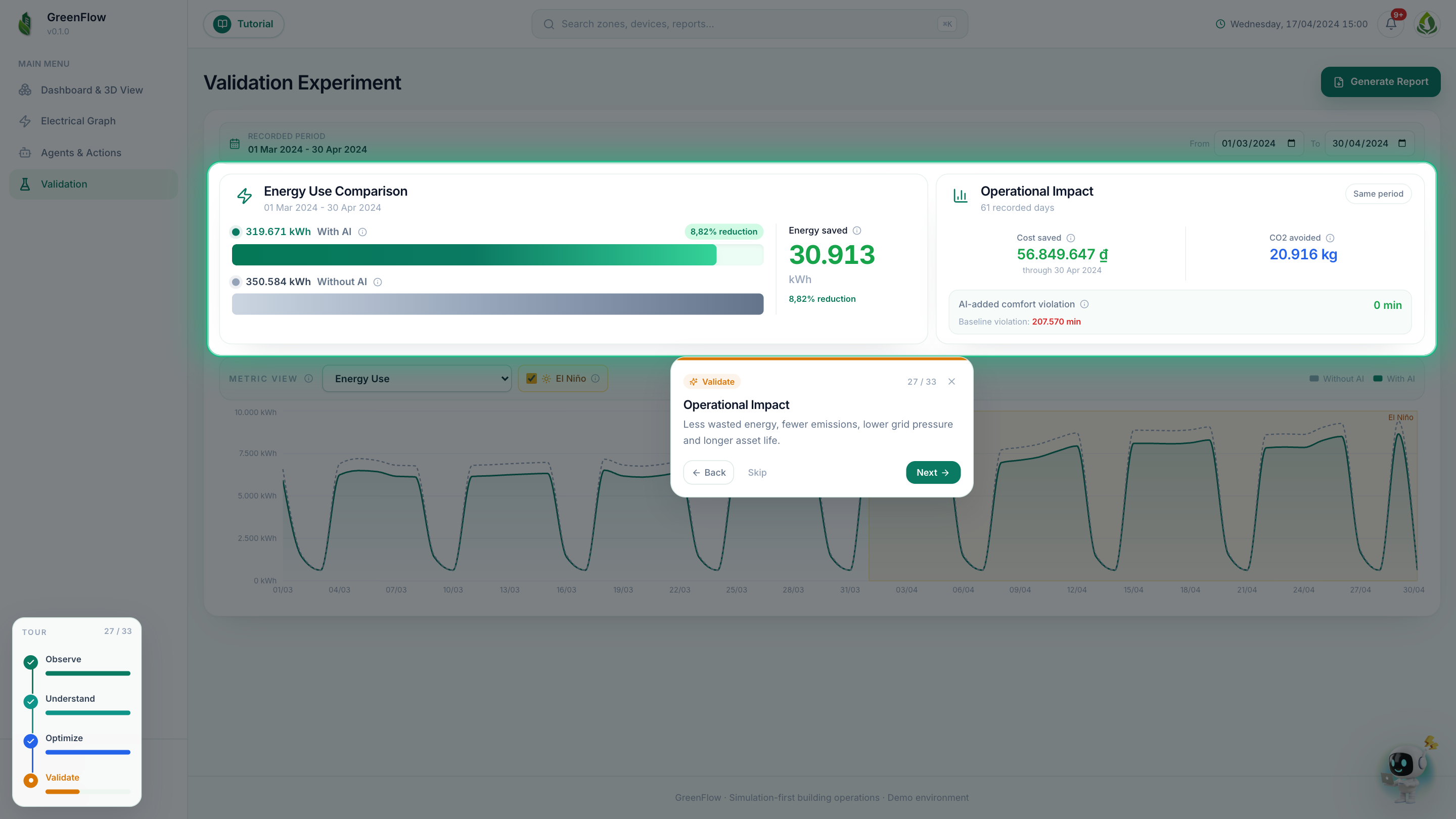
- •Integrated the AI system with a 3D building digital twin, action queue, simulation comparison, chatbot, and audit trail
Tech / Skills
Project Media
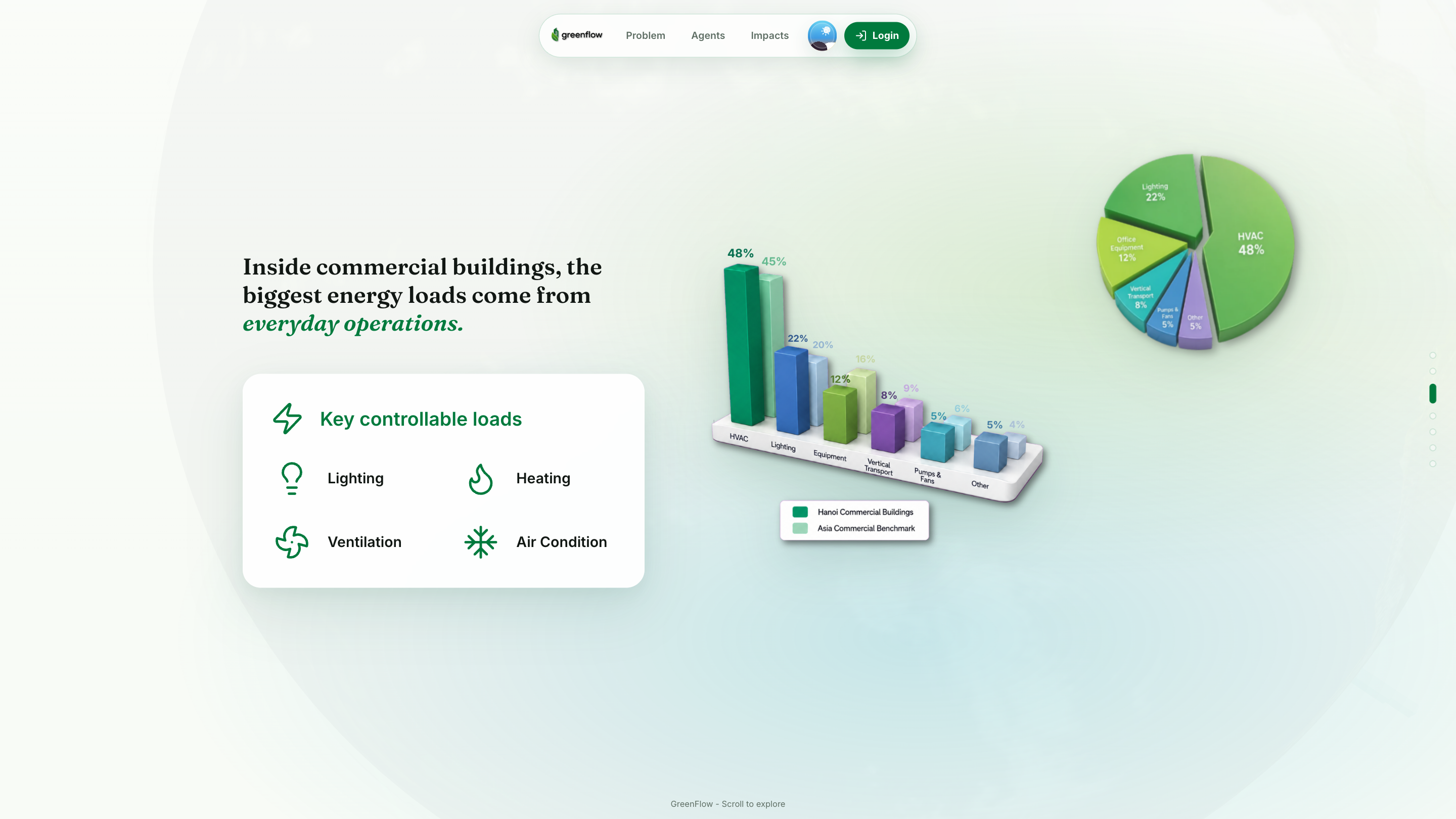
Selected website screens and product walkthrough.
Case Study
1) Context / Problem
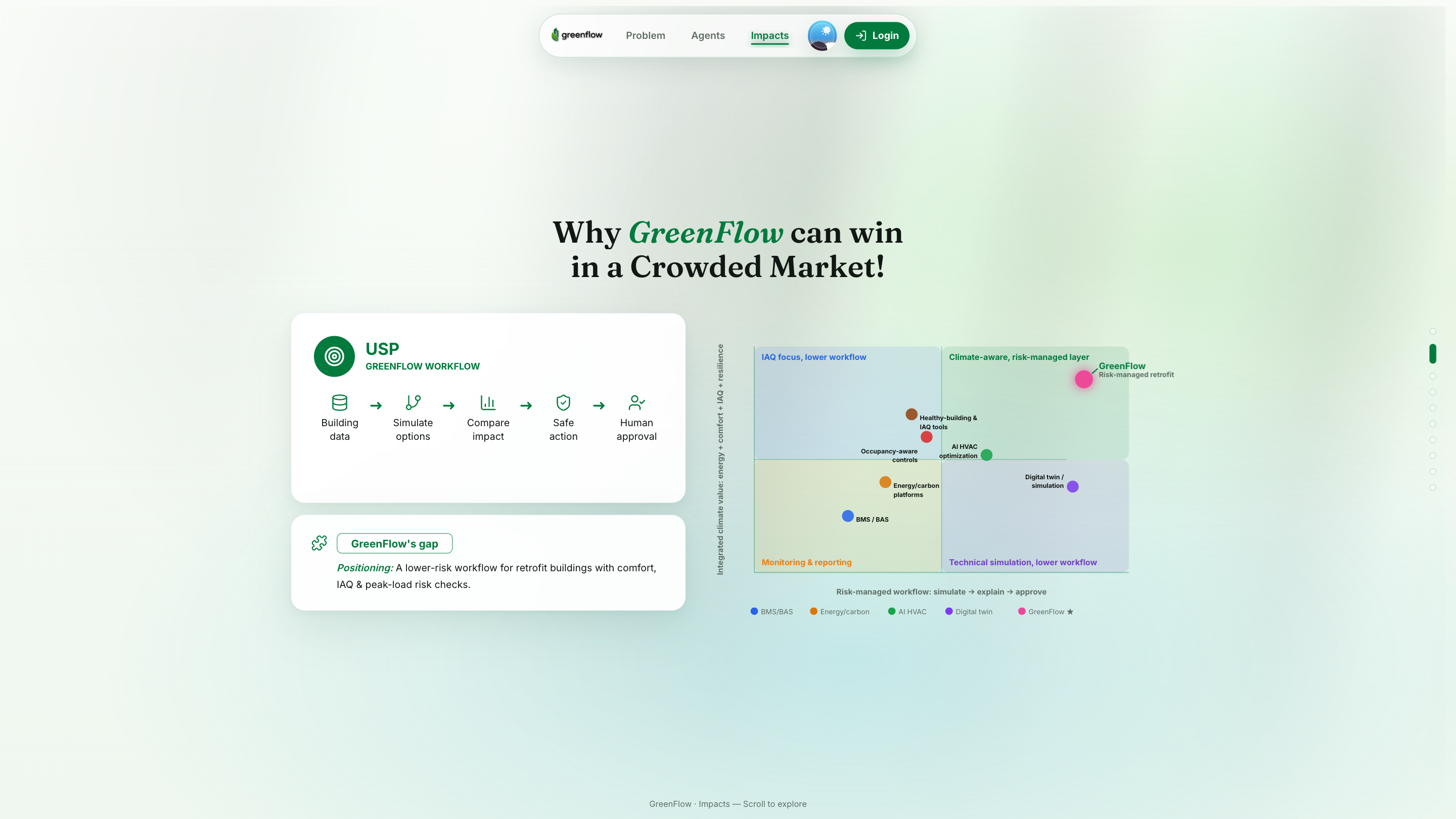
Commercial buildings produce fragmented telemetry, equipment, geometry, weather, occupancy, and policy data. GreenFlow addresses the challenge of turning that context into useful energy recommendations without allowing an LLM to invent operational figures or directly control critical systems.
2) Your Role
As AI Engineer, I built the agent system, function-calling layer, graph-grounded RAG workflow, and operator chatbot that connect building data to explainable recommendations.
3) Approach
I structured the LangGraph workflow from intent classification and planning through semantic analysis, prediction, control, counterfactual simulation, policy checks, approval, and response composition. Structured questions use typed tools and parameterized SQL; unstructured questions use hybrid retrieval across the building knowledge graph, policies, reports, and historical context. Every proposed action remains simulation-first and auditable.
4) Result / Impact
GreenFlow became a finalist at the Vin Green Future Hackathon 2026 with a working agentic digital-twin platform: grounded building Q&A, linked entity context, optimization and prediction runs, policy-gated actions, human approval, and end-to-end agent traces.
5) Learnings
Reliable agentic control depends on explicit data boundaries. Function-calling should own operational numbers, retrieval should supply semantic context, simulation should evaluate consequences, and policy plus human approval should govern execution.
6) Links
See links above.